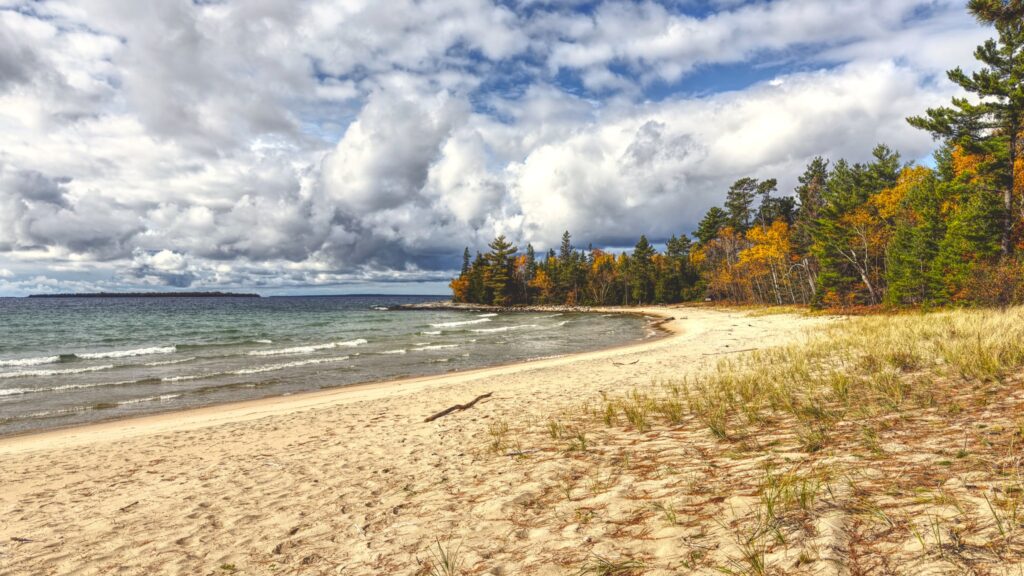
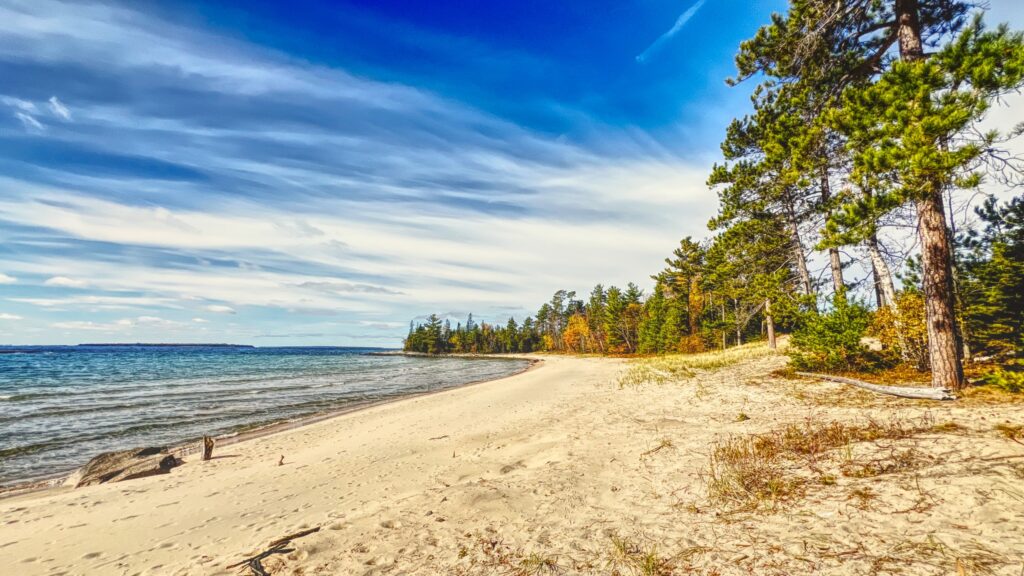
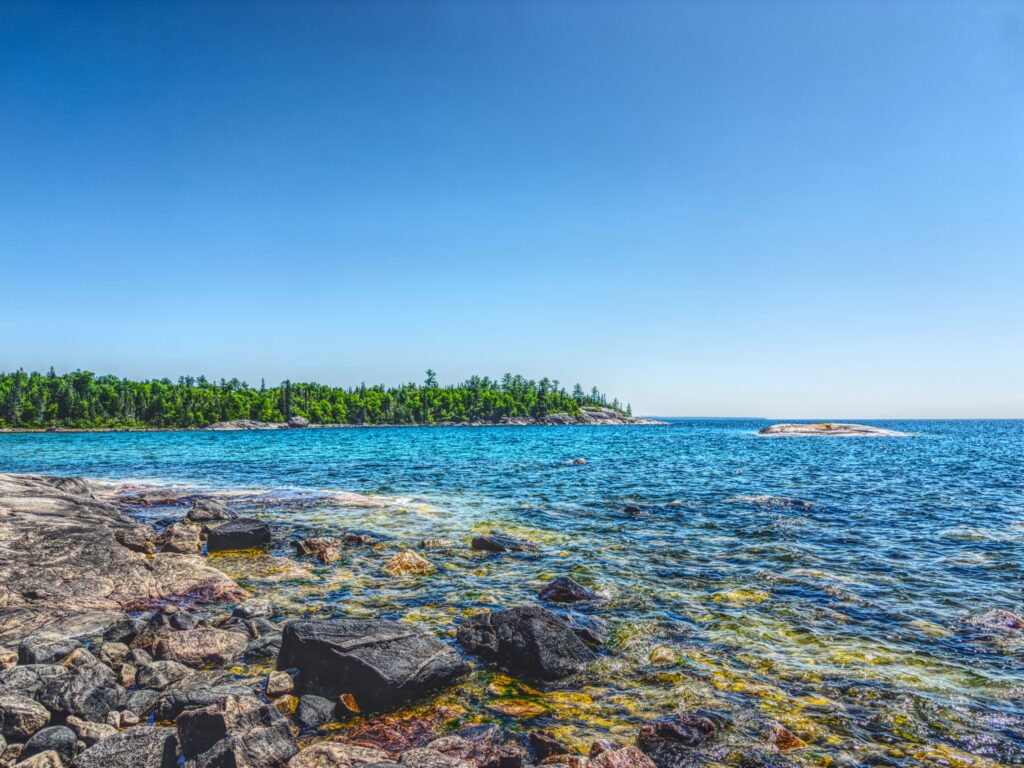
There’s a calm at Katherine Cove that feels older than the trails leading there. You step from the pines and suddenly the world opens — a sweep of white sand, granite ledges polished by a thousand winters, and the endless breath of Lake Superior rolling in.
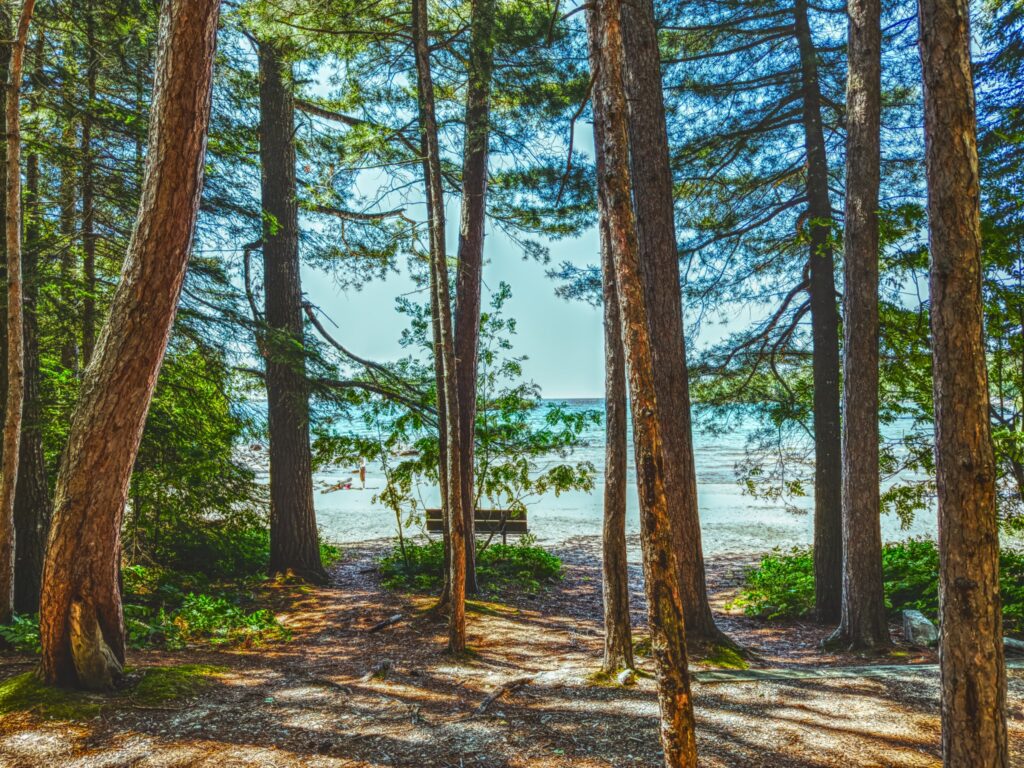
Katherine Cove, tucked along Highway 17 inside Lake Superior Provincial Park, is one of the most photographed and visited coves on the lake’s rugged eastern shore. Known for its shallow turquoise waters and smooth, wave-worn rocks, it offers a rare contrast to Superior’s otherwise harsh and unpredictable character.
The cove lies on a stretch of coast that has been traveled for thousands of years. Long before the highway and provincial park were established, Anishinaabe peoples moved through these waters by canoe, fishing, trading, and following the rhythms of the seasons. Artifacts and oral histories connect this shoreline to the broader Lake Superior cultural landscape, which was—and still is—a living part of Indigenous life and story.
In the 18th and 19th centuries, this same coast formed part of the route used by fur traders and voyageurs paddling between Montreal and Fort William (now Thunder Bay). The small bays and coves, including Katherine Cove, offered brief refuge from Superior’s notorious storms. Even today, local boaters and paddlers know that the lake can shift from calm to dangerous in minutes.
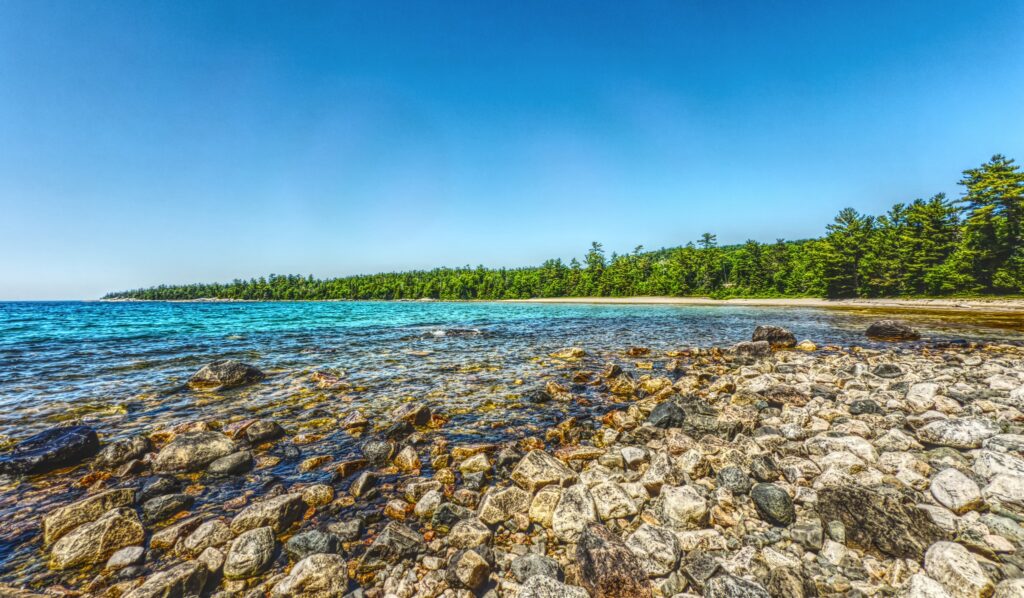
Just south of the main beach lies a geological feature known as Bathtub Island —a naturally carved sandstone basin formed by centuries of wave action and freeze-thaw cycles. The rocks here are part of the Pancake Bay Formation, dating back nearly a billion years, when this area was part of a vast ancient rift system that split the heart of the continent.
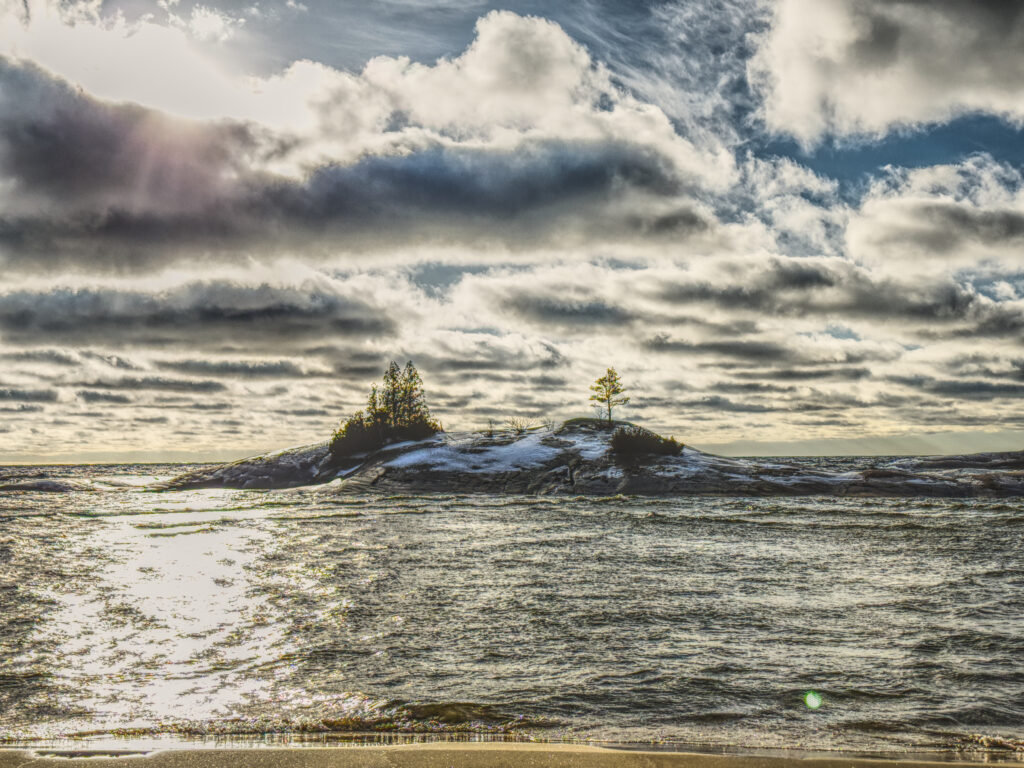
Katherine Cove was included within Lake Superior Provincial Park, created in 1944, to preserve this wild coastal landscape of cliffs, beaches, and boreal forest. The park now protects over 1,500 square kilometres of wilderness, including archaeological sites, historic travel routes, and more than 200 kilometres of shoreline.
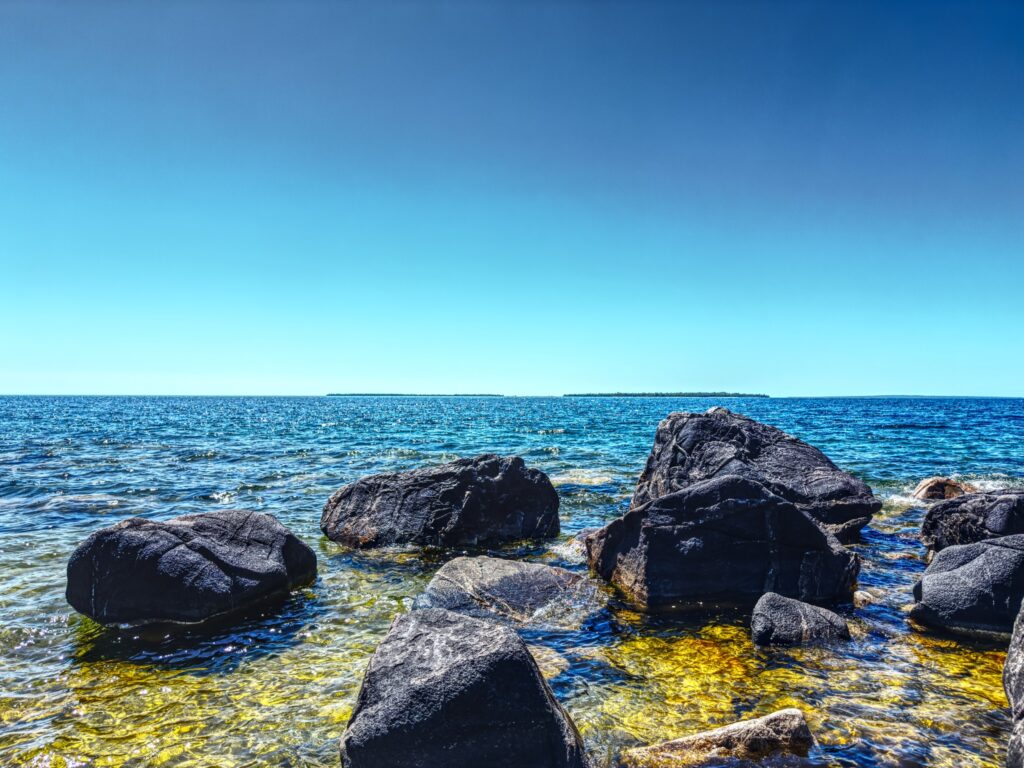
Today, Katherine Cove remains a favorite stop for travelers along the Trans-Canada Highway. On calm days, the water turns glassy and clear, reflecting the pine ridges above it. On stormy days, waves pound the granite ledges just as they did centuries ago, reminding visitors that this is still Superior country—untamed, enduring, and steeped in history.