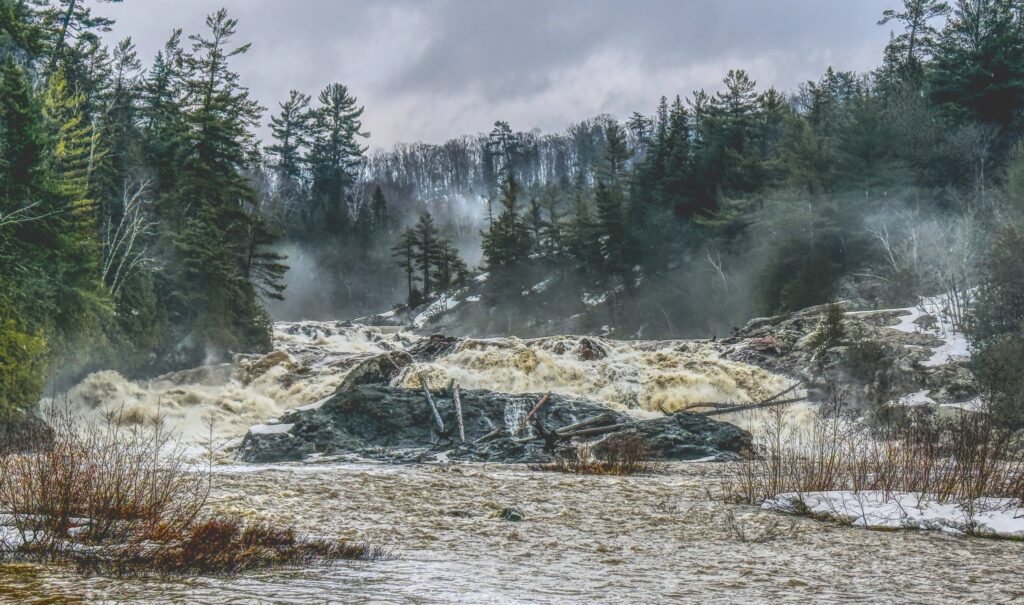
There’s a place along Highway 17 North where the roar of rushing water drowns out the hum of traffic, and the wilderness suddenly feels much bigger. Chippewa Falls isn’t just a roadside attraction—it’s one of Algoma’s most iconic natural landmarks, a thundering cascade that marks the halfway point of the Trans-Canada Highway and an essential stop for anyone exploring the Lake Superior region.
Arriving at the Falls
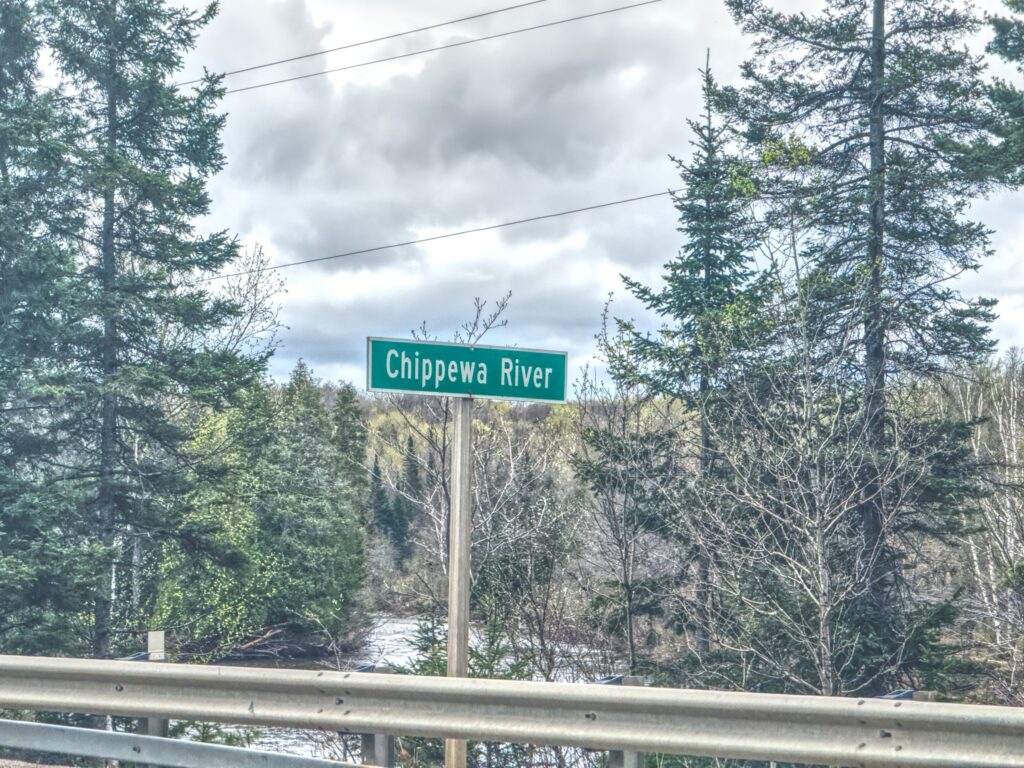
Driving north from Sault Ste. Marie, the highway gradually leaves civilization behind. Forest closes in, the shield rock rises, and the air feels cooler, wilder. About 52 kilometers from the city, a small sign points to Chippewa Falls, and you pull into a small lot surrounded by trees and the deep scent of cedar and pine.
The moment you open your door, you hear it—the powerful rush of the Chippewa River as it tumbles over broken layers of ancient rock. A short path leads you straight to the base of the falls, where whitewater crashes and churns, mist drifting up from the impact zone.
Exploring the Falls
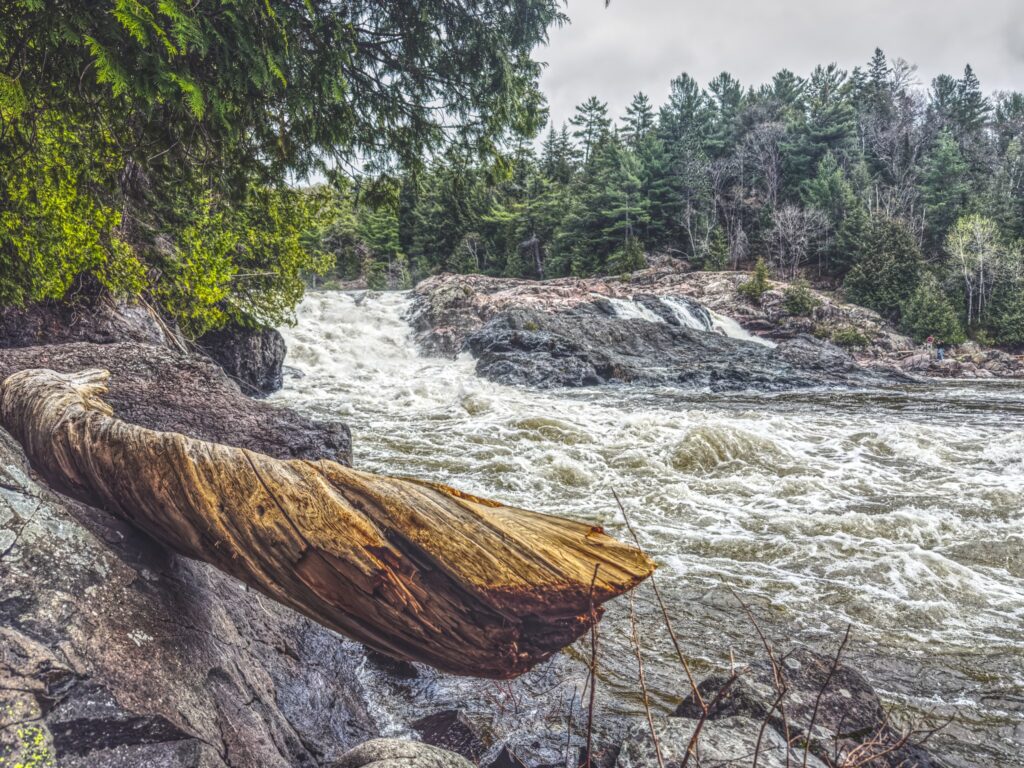
Chippewa Falls isn’t a single vertical drop—it’s a multi-tiered, rugged cascade that invites exploration. Smooth, glacial-worn stone forms natural steps and ledges, perfect for climbing (with care) to higher viewpoints. Each level offers a new angle: swirling rapids, foaming pools, and sections where the water glides gently before gathering speed and plunging downward again.
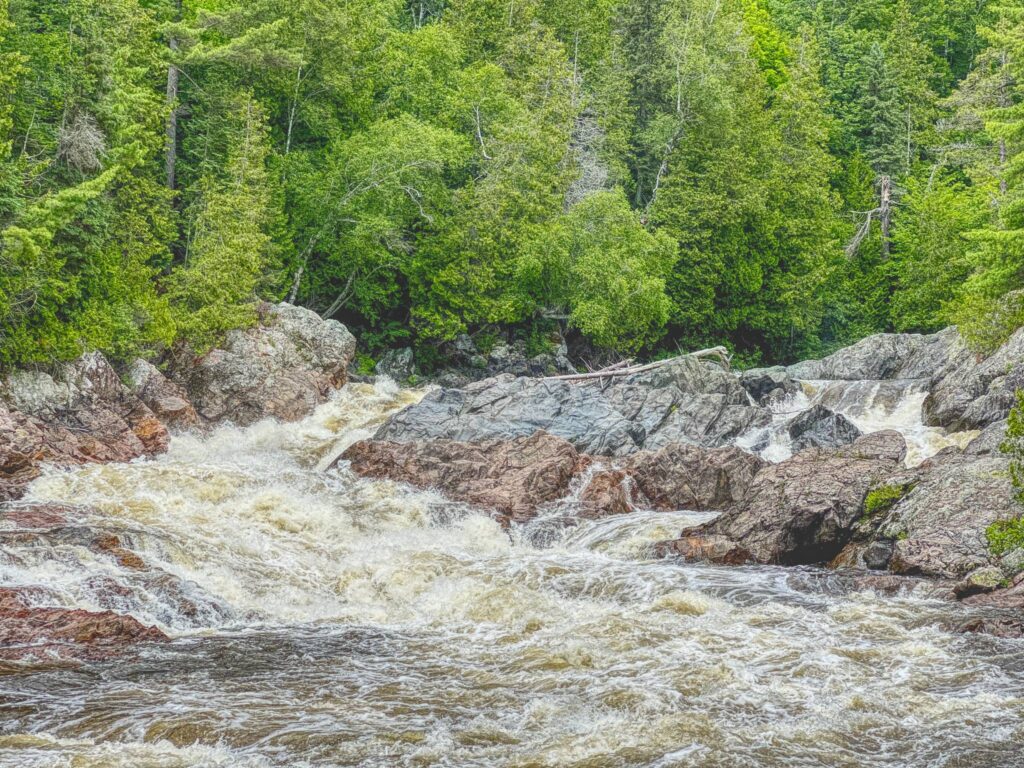
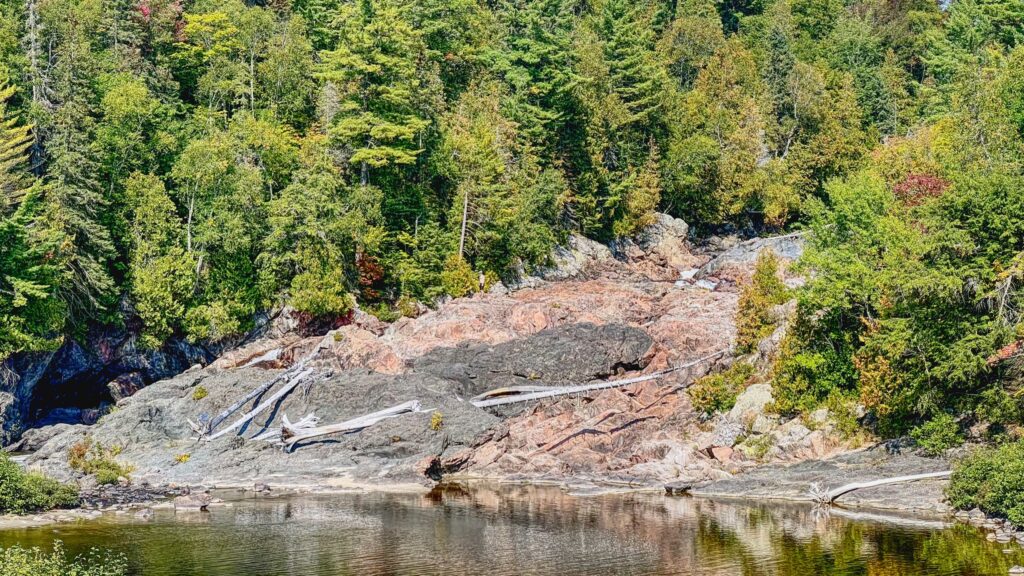
Wildflowers cling to cracks in the rock, dragonflies hover nearby and the warm sun makes the stone surfaces ideal for picnics or photography. In autumn, the entire hillside glows with deep reds and burning golds, creating one of the most spectacular fall colour scenes on Highway 17.
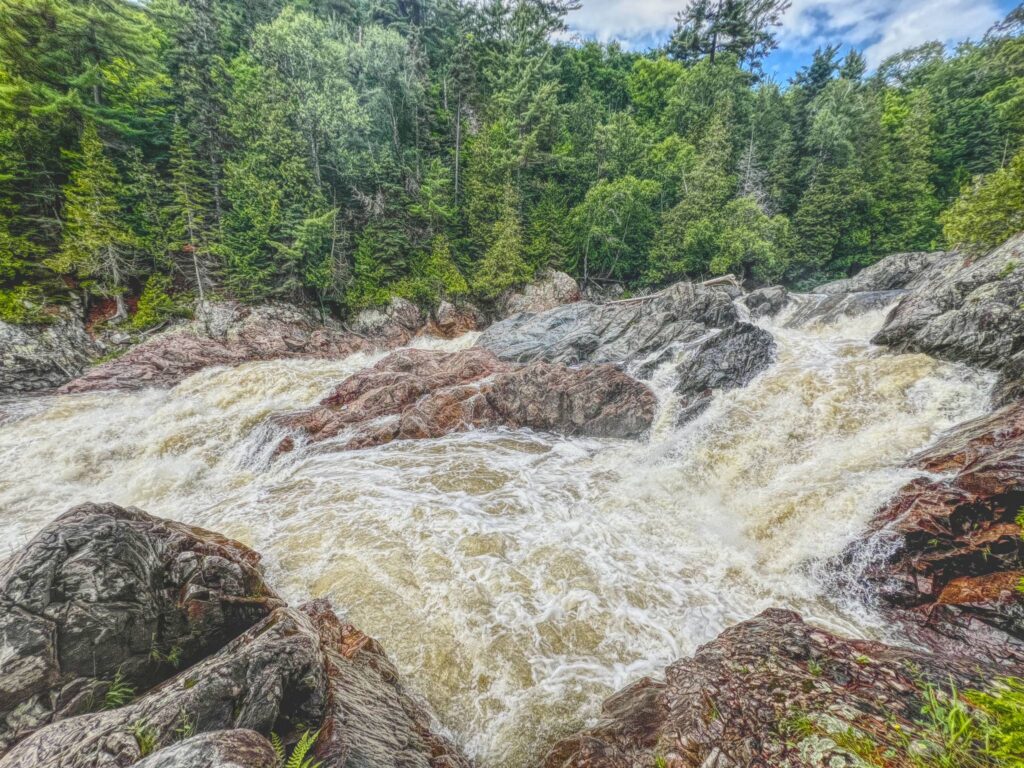
The falls run year-round, but in spring they become a force of nature—loud, thunderous, and impossible to ignore. In the middle of summer, it’s not uncommon for the falls to be nearly non existent, especially during droughts.
History Along the Highway
At the base of the main viewpoint sits a sign marking this spot as the official halfway point of the Trans-Canada Highway, stretching from the Atlantic to the Pacific. It’s the perfect place to stand, breathe in the cool air, and feel the enormity of the country you’re crossing—whether you’re out for a Sunday drive or on a full cross-Canada journey.
A Quick Adventure For All
Chippewa Falls is the ideal “stretch-your-legs” stop—but it’s also much more than that. You can spend five minutes here or an hour climbing the upper cascades and wandering along the river. It’s an easy adventure for families, photographers, road-trippers, and anyone in need of a moment where nature completely takes over.
There are washroom facilities on-site , basic parking, and garbage disposal. It’s best to come prepared with water, snacks, and proper footwear, especially if you plan to climb the rock shelves. Chippewa River Restaurant is located across the highway from the falls.
Practical Tips
- Location: Approx. 52 km north of Sault Ste. Marie on Highway 17.
- Parking: Small lot directly beside the highway.
- Best Seasons:
- Spring for maximum water flow
- Summer for easy climbing and warm rock viewpoints
- Fall for legendary colours
- Trail Info: Short, easy walk to the main falls. Adventurous hikers can continue up the riverbed (exercise caution).
- Facilities: Washrooms, garbage disposal, a small restaurant across the highway from the falls.
- Photo Opportunities: Base of the falls, mid-level rock ledges, and upper cascades.
Why Chippewa Falls Stands Out
Chippewa Falls is one of those places that captures the spirit of Northern Ontario: bold, rugged, and unforgettable. It’s a meeting point between road and wilderness—a reminder that in Algoma, nature is never far from the highway. Whether you stop for a quick look or climb the rocks for a full exploration, the falls offer a refreshing pause in the middle of the Trans-Canada journey.
It’s a place where travelers reset, photographers linger, and the power of Lake Superior country reveals itself one cascading step at a time.
A short drive south of Chippewa Falls you’ll find Harmony Beach, one of the warmest beaches on the east coast of Lake Superior.